2026-06-26
The History of Punting in Cambridge
How punting came to the River Cam in Cambridge: the origins of pleasure punting in the early 1900s, the flat-bottomed punt design, and how it became a Cambridge icon.
 By Jordan Harrington, Cambridge punting guide since 2021
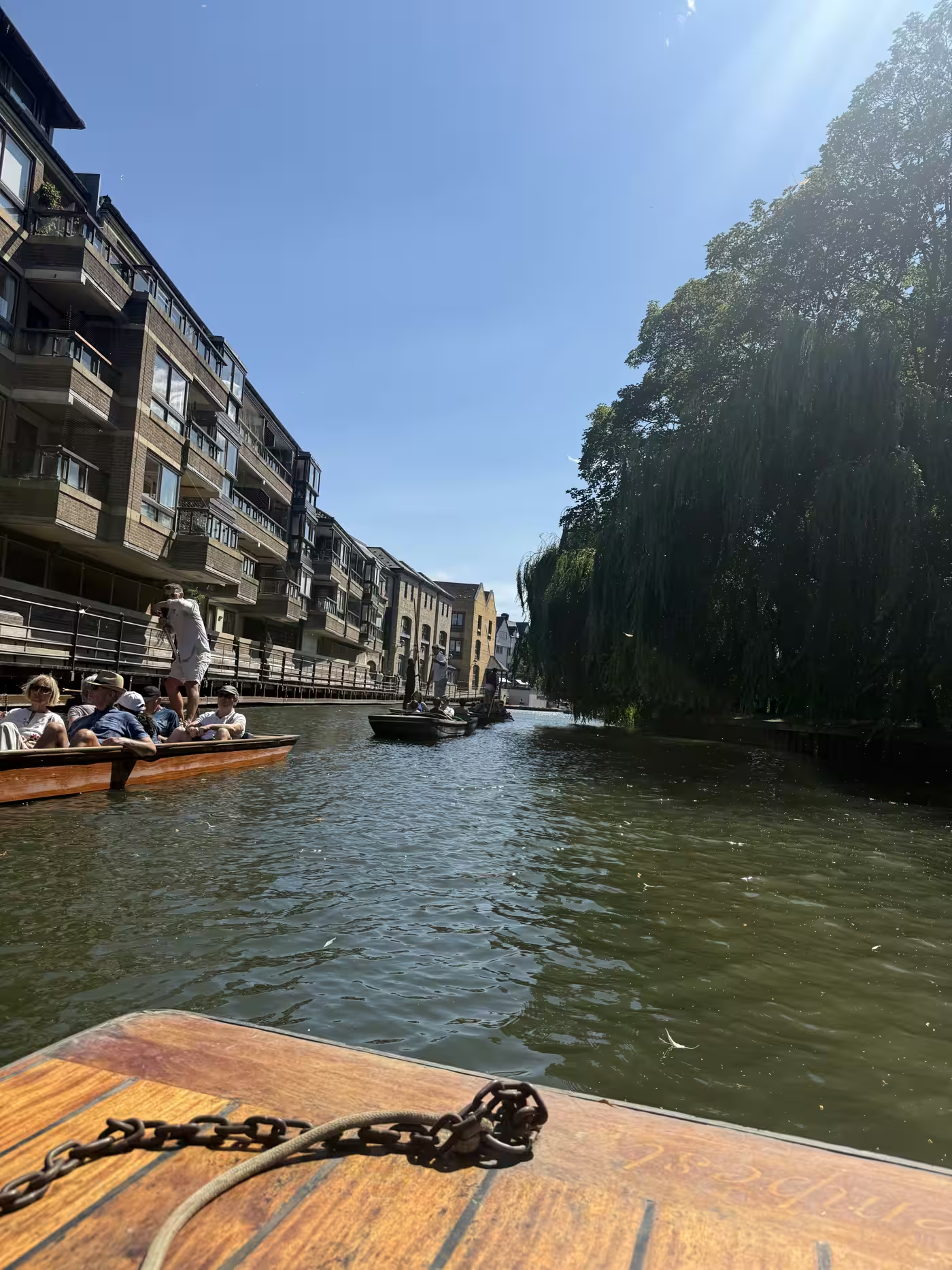
People assume punting has always been part of Cambridge, that students have poled past King's since the Middle Ages. They have not. The pleasure punt you book today is barely older than the motorcar. I have guided punting tours on the Cam since 2021, and the question I get most on the water, right after "is that pole heavy," is how long this has actually been going on. Here is the honest answer, with real dates.
When did punting in Cambridge actually begin?
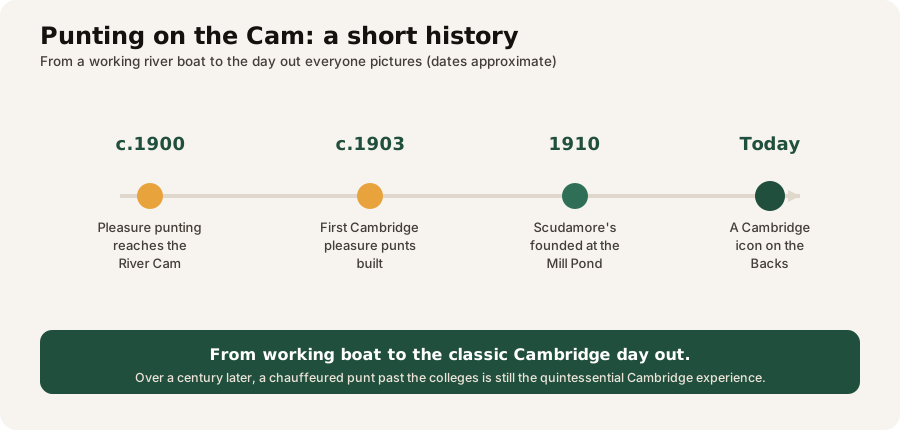
Pleasure punting on the River Cam started around 1900, at the very start of the twentieth century, not centuries earlier. Traditional Thames-style pleasure punts arrived in Cambridge roughly between 1902 and 1904, and the first punting company, Scudamore's, was founded in 1910 at the Mill Pond. Maurice Jack Scudamore is recorded building his first punt in a Chesterton boatyard in 1903.
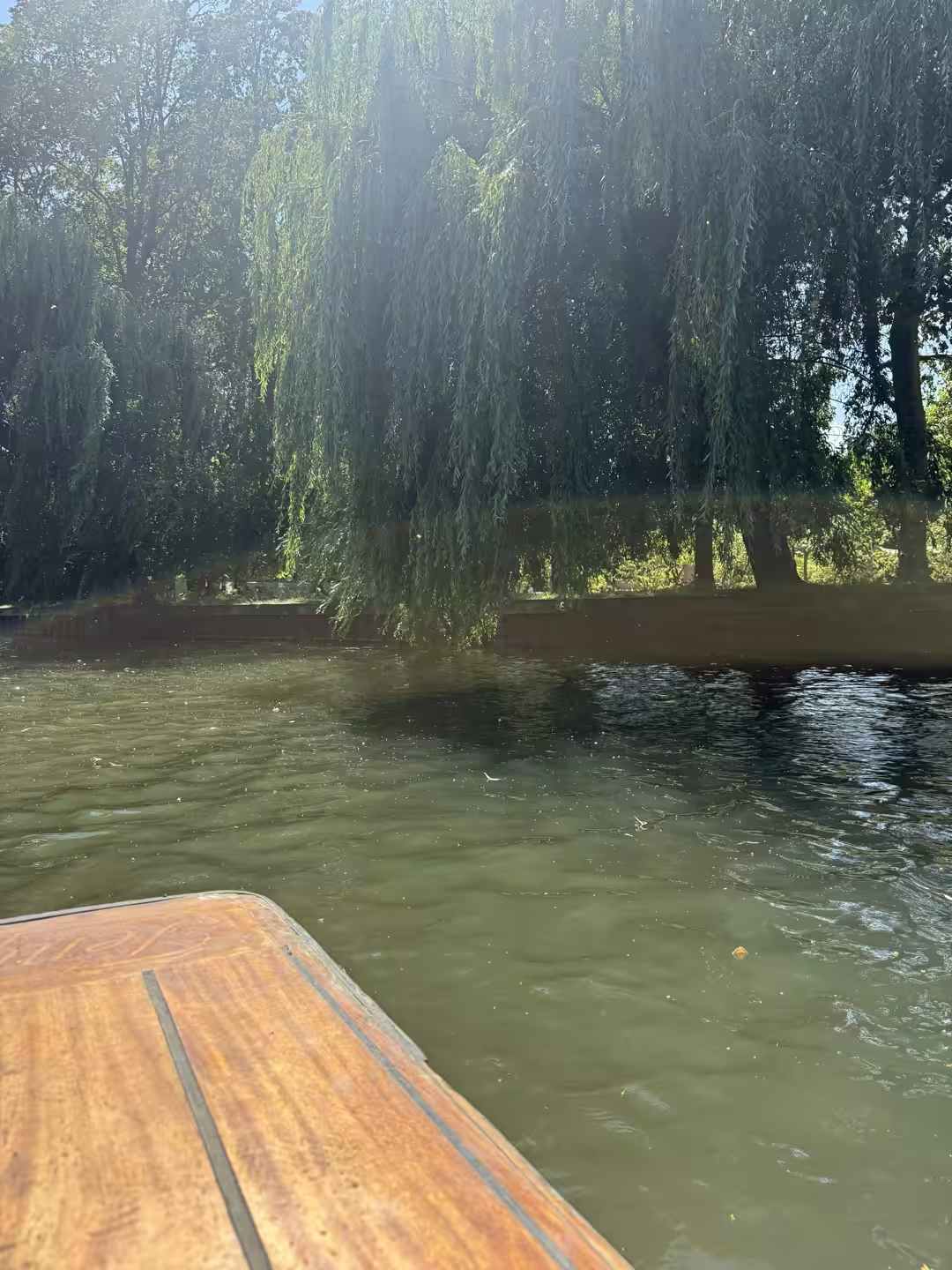
So the tradition that feels ancient is comfortably within living memory of the buildings around it. King's College Chapel was finished in 1515. The punts drifting beneath it are an Edwardian arrival, almost four hundred years younger than the stone they show off.
The punt itself is older than its Cambridge leisure use. As a working flat-bottomed boat it had been used for centuries on rivers like the Thames, mainly for carrying loads, cutting reeds and fishing in shallow water. What changed around 1900 was the purpose. The boat that had hauled goods became the boat you hired for an afternoon, and Cambridge took to it fast.
Here is the timeline, with the dates that can be sourced and the ones that cannot.
| When | What happened |
|---|---|
| Centuries before 1900 | The flat-bottomed punt is used as a working boat for cargo, fishing and reed-cutting on English rivers |
| Around 1900 | Punts start being used as pleasure craft in Cambridge, at the start of the twentieth century |
| 1902 to 1904 | Traditional Thames-style pleasure punts are introduced to Cambridge |
| 1903 | Maurice Jack Scudamore builds his first punt in a Chesterton boatyard |
| 1910 | Scudamore's, the first punting company, is founded at the Mill Pond |
Dates drawn from the Museum of Cambridge, Scholars Punting and Wikipedia. Where a source gives a range rather than a single year, the range is kept rather than guessed at.
Book your punt
Ready to glide the College Backs?
Shared, private and student-guided punts run daily along the River Cam. See the live price and free-cancellation terms on the operator's official listing before you pay.
Check live availability & prices →4.7 · 1,521 reviews · free cancellation up to 24 hours
What exactly is a punt, and how is it poled?
A punt is a flat-bottomed wooden boat with square ends, no keel and no curved hull, designed for shallow, slow-moving rivers. You do not row it. You stand at one end and push it along by planting a long pole on the riverbed, then steering with that same pole as it trails behind you like a rudder.
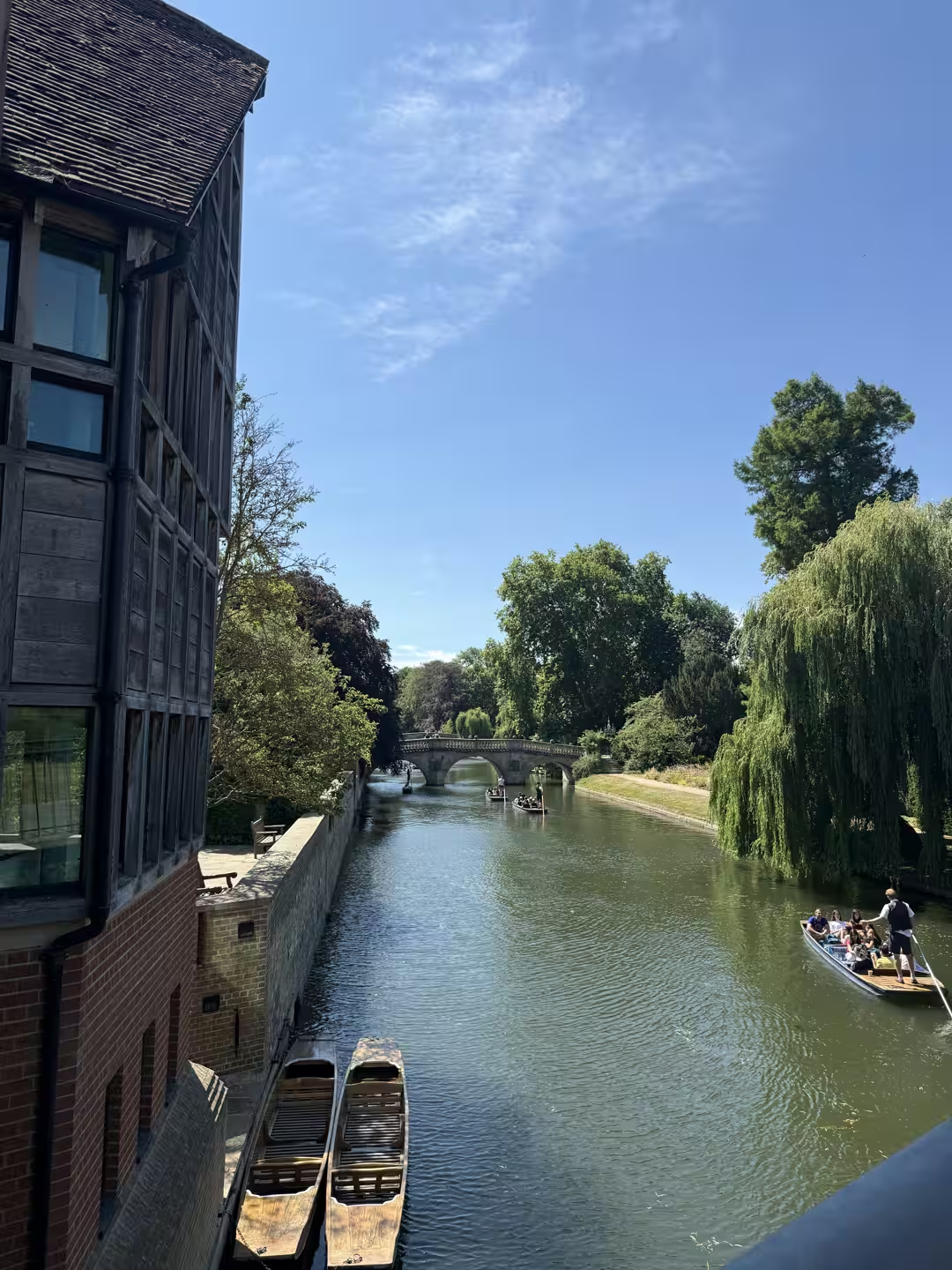
The flat bottom is the whole point. A keeled rowing boat would scrape and stick in the shallow, weedy stretches of the Cam. The punt sits on top of the water rather than cutting into it, which is why it can glide over a riverbed that is sometimes only a few feet down. That same flatness is why it feels so stable once you stop expecting it to behave like a canoe.
Poling looks effortless when a good chauffeur does it and faintly chaotic when a first-timer tries. You drop the pole, let it hit the bottom, push, then recover the pole hand over hand before the next stroke. Steering happens on the recovery, by dragging the pole through the water at an angle. Get the rhythm and the punt tracks straight. Miss it and you spin gently into the bank, which is most people's first ten minutes on a self-hire boat.
The boat broken into its parts.
| Part | What it is |
|---|---|
| Hull | A flat-bottomed, keel-less wooden shell with square ends, built to sit on shallow water |
| The pole | A long pole, usually aluminium or wood, planted on the riverbed to push and steer the boat |
| Till (the deck) | The flat platform at one end where the punter stands to pole |
| Passenger seats | Cushioned bench seating along the open middle of the boat, facing the view |
If you want the full picture of the boat and how the River Cam shaped it, the punt as a boat has a longer technical history than the Cambridge leisure version does.
How did punting become a Cambridge tradition?
Once Scudamore's opened in 1910 and pleasure punts caught on with students and visitors, punting spread along the stretch of river behind the colleges and never left. The route past the great college lawns gave it a setting nothing else in England could match, and within a couple of generations a boat that arrived as a novelty had become the thing people most associate with a Cambridge summer.
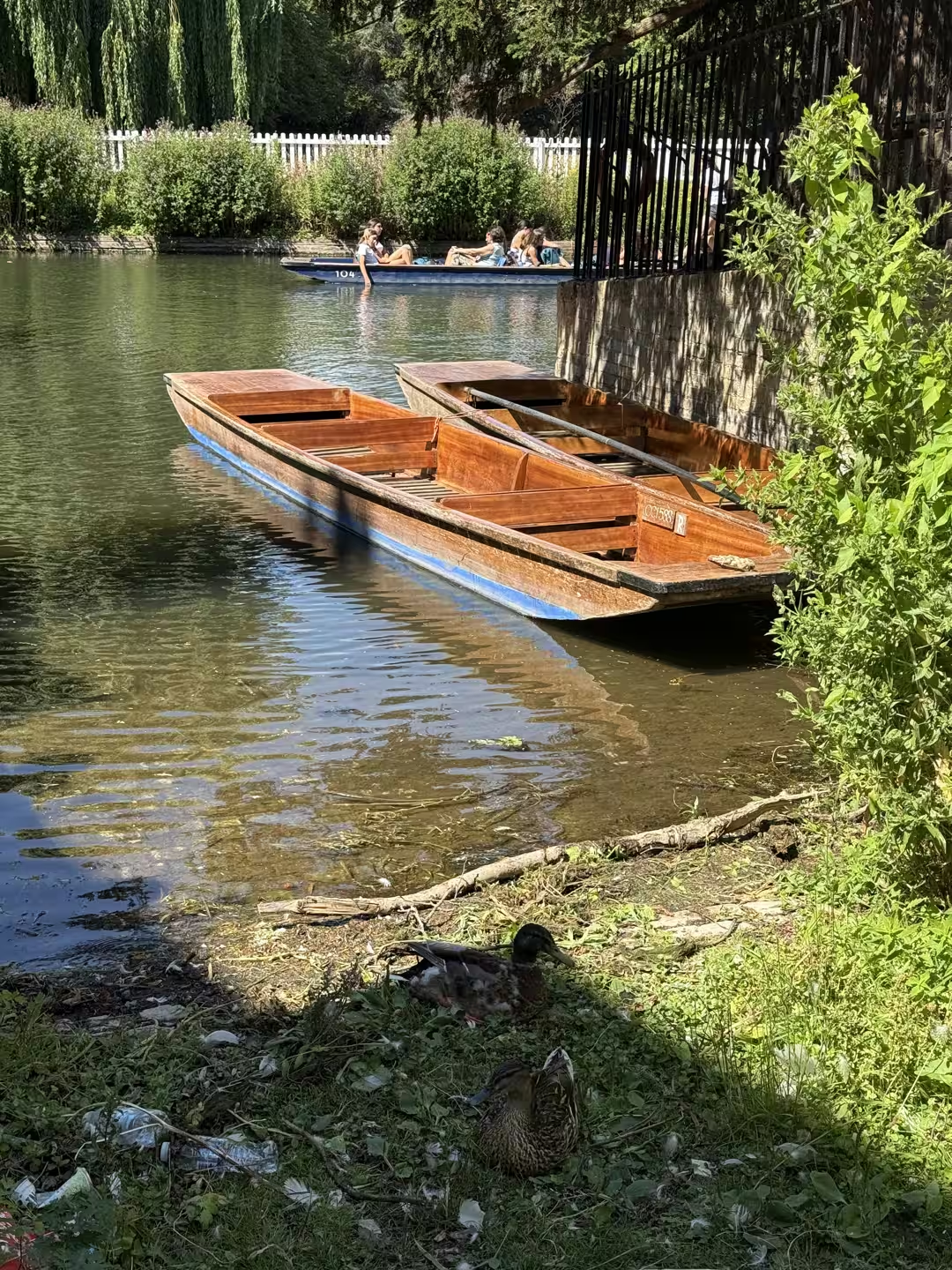
The setting did most of the work. The boats happened to launch right beside The Backs, the run of college grounds where the lawns of King's, Clare and Trinity slope down to the water. From a punt you see those colleges from behind, the side most visitors never reach on foot, drifting under bridges that people otherwise only cross. That angle is exactly what makes the College Backs the heart of every tour today.
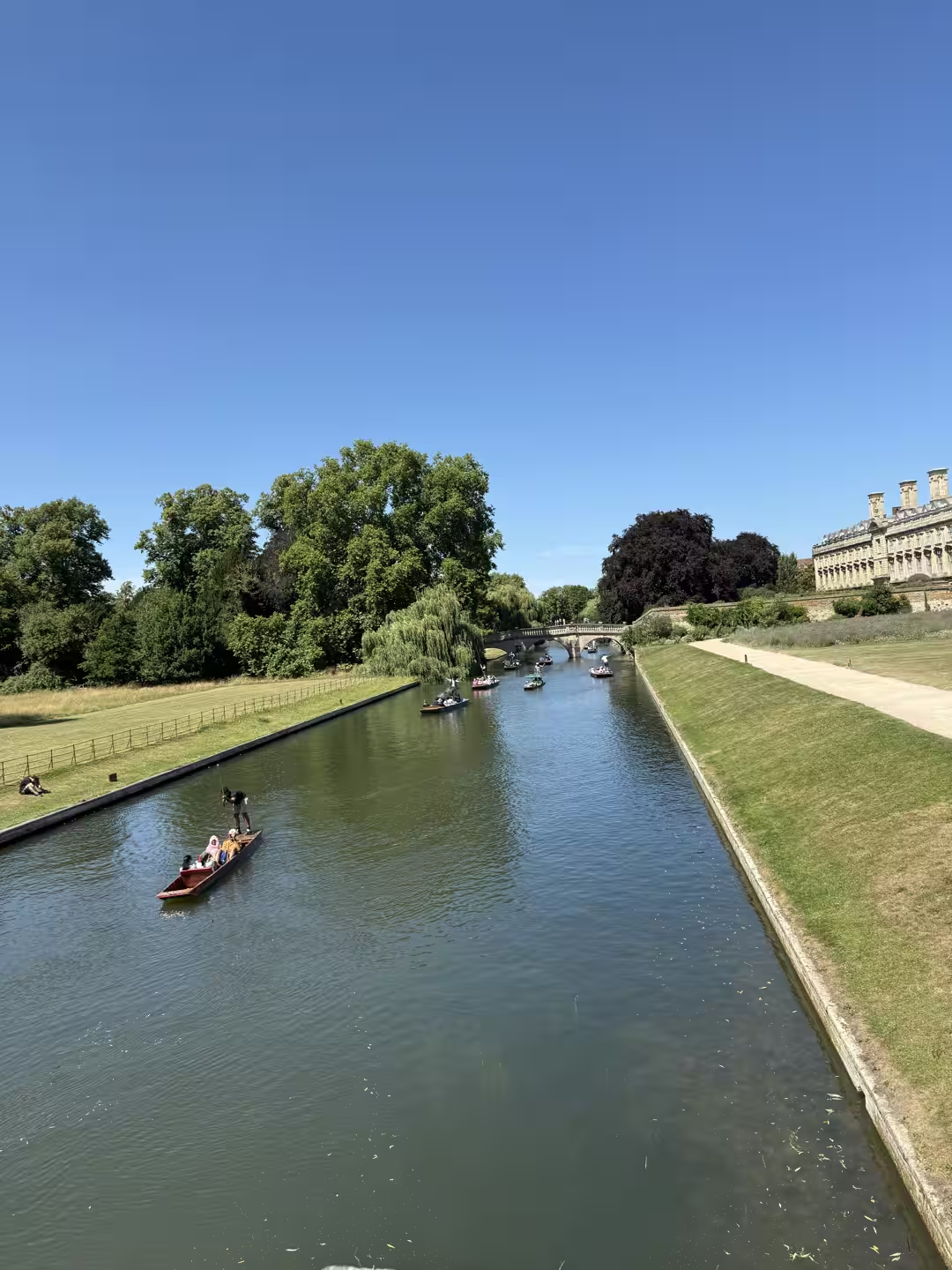
What started as a few hired boats grew into a working trade, and the trade kept the old shape of the thing. The punts are still wooden, still flat-bottomed, still poled by hand. The Mill Pond where Scudamore's began is still one of the main launch points. A visitor in 1910 and a visitor in 2026 would recognise each other's afternoon, which is rare for anything in tourism.
Then versus now, what changed and what did not.
| Then (early 1900s) | Now | |
|---|---|---|
| The boat | Flat-bottomed wooden punt, poled by hand | Flat-bottomed wooden punt, poled by hand, essentially unchanged |
| Why people went | A new leisure novelty for students and visitors | A signature Cambridge experience and the city's best river view |
| Who poled | Owner-operators and students | Chauffeured guides or self-hire visitors |
| Operators | Scudamore's, founded 1910, the first | Several companies sharing the same stretch of river |
The honest verdict, which I cover in full in is punting in Cambridge worth it, is that the history is part of the appeal but not the whole of it. You are buying the view and the boat as much as the heritage. Still, it does something to an afternoon to know the boat under you is the same design that has worked this river for over a century.
Where can you see this history for yourself?
The simplest way is a chauffeured trip along the Backs, where a guide poles the boat the traditional way and tells you the stories as you pass each college. The Cambridge Shared Punting Tour runs the historic route past King's, Clare and Trinity, and you can check live availability and prices on the operator's official GetYourGuide listing.
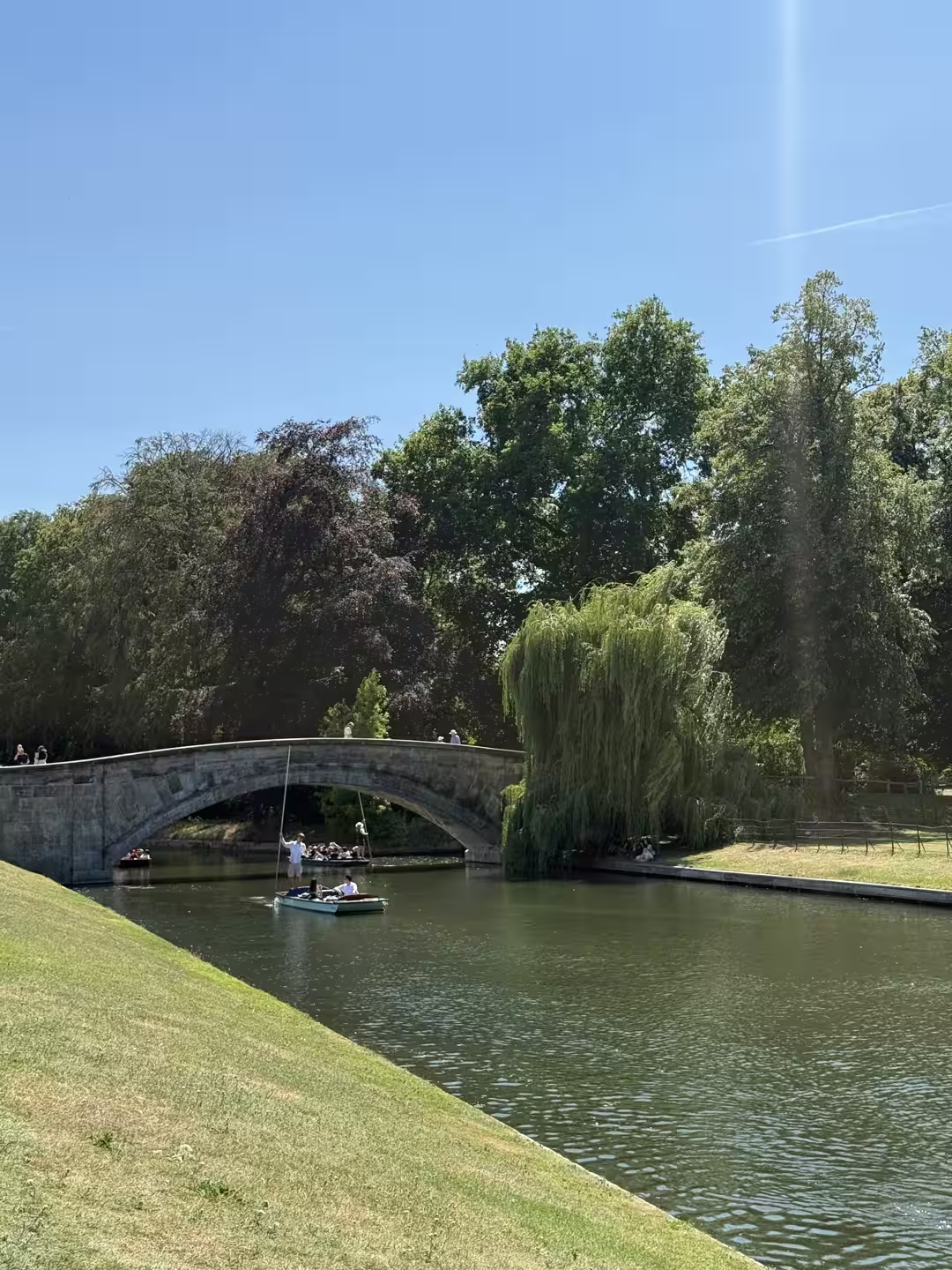
If you would rather pole it yourself the way the Edwardians did, self-hire is open to you, though expect the first ten minutes to be humbling. Either way, see the routes and prices side by side on the comparison page, and if you are filling out the rest of the day, things to do in Cambridge pairs neatly with an hour on the water.